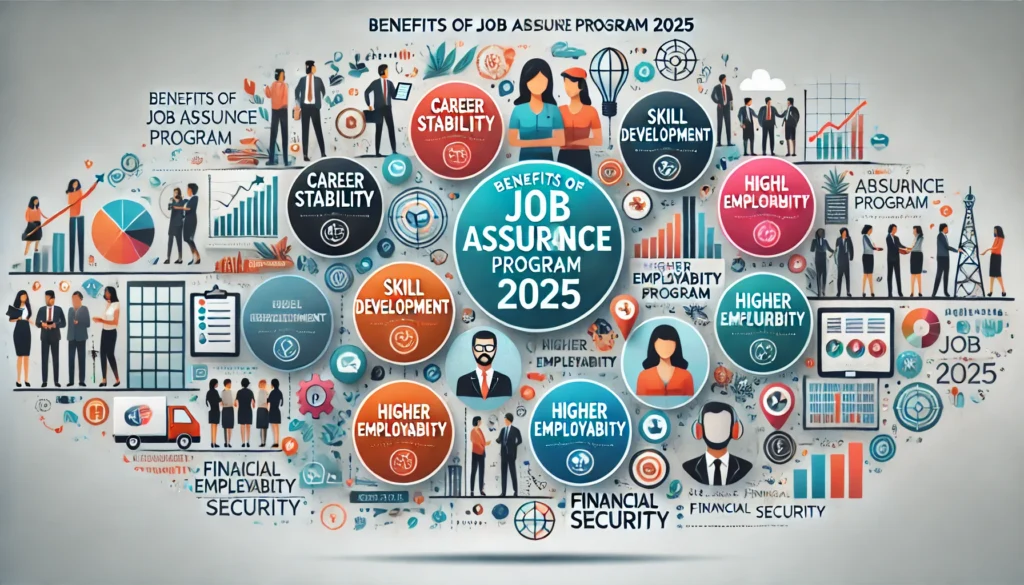
Job assurance programs are structured initiatives designed to equip participants with skills, training, and guaranteed employment opportunities in specific industries or roles. These programs are particularly appealing in 2025 due to the evolving job market and the increasing demand for specialized skills. Here’s how such programs benefit individuals:
1. Guaranteed Employment
- Primary Benefit: Participants receive a confirmed job offer upon completing the program, reducing the uncertainty of job searching.
- Peace of Mind: Eliminates anxiety about unemployment and provides financial security.
- Fast-Track Entry: Participants transition quickly into the workforce without prolonged gaps after training.
2. Industry-Relevant Skills
- Tailored Curriculum: Programs are designed in collaboration with industry experts to address current market demands.
- Skill Development: Focus on practical, hands-on training in high-demand areas such as IT, data analytics, digital marketing, and more.
- Future-Ready: Participants gain skills that align with emerging trends like AI, cloud computing, and sustainability.
3. Financial Benefits
- Cost-Effective Learning: Many programs are affordable or allow payment after securing a job (income-sharing agreements).
- Higher Earning Potential: Specialized training ensures participants can command competitive salaries.
- Loan Assistance: Some programs offer financial support for enrollment, repayable after employment.
4. Career Guidance and Mentorship
- Expert Mentors: Participants are paired with industry professionals for personalized advice and support.
- Resume Building: Assistance with crafting resumes that highlight strengths and align with industry expectations.
- Mock Interviews: Practice sessions improve confidence and interview performance.
5. Networking Opportunities
- Professional Connections: Direct access to recruiters, hiring managers, and industry leaders.
- Alumni Networks: Participants become part of a network of professionals who can offer referrals and job insights.
- Career Events: Exposure to job fairs, webinars, and industry-specific gatherings.
6. Practical Experience
- Real-World Projects: Many programs include internships, live projects, or on-the-job training.
- Portfolio Development: Participants can showcase their work to potential employers.
- Soft Skills Training: Emphasis on teamwork, communication, and problem-solving to excel in professional settings.
7. Flexibility and Accessibility
- Online and Offline Options: Programs are often hybrid, catering to different learning preferences.
- Global Reach: Participants can enroll from anywhere, often accessing global job markets.
- Self-Paced Learning: Some programs allow learners to progress at their own pace.
8. Bridging the Skill Gap
- Immediate Industry Needs: Helps meet the demand for skilled professionals in sectors experiencing labor shortages.
- Diverse Fields: Covers a wide range of industries, from IT and healthcare to design and business.
- Inclusive Opportunities: Welcomes individuals from diverse educational backgrounds, including freshers and career switchers.
9. Increased Confidence
- Structured Pathway: A clear roadmap to employment builds self-assurance.
- Employer Partnerships: Participants trust the program’s credibility due to tie-ups with reputed companies.
- Certifications: Industry-recognized credentials boost credibility and self-worth.
10. Long-Term Career Growth
- Upskilling Opportunities: Many programs offer continuous learning options even after securing a job.
- Role Transitions: Participants are trained for entry-level roles with the potential for quick promotions.
- Adaptability: The skills acquired prepare participants for future career shifts or advancements.
Conclusion
Job assurance programs in 2025 provide a comprehensive solution for individuals seeking stable and rewarding employment. By offering guaranteed jobs, industry-aligned training, and financial support, these programs empower participants to navigate the job market confidently and achieve long-term career success.